
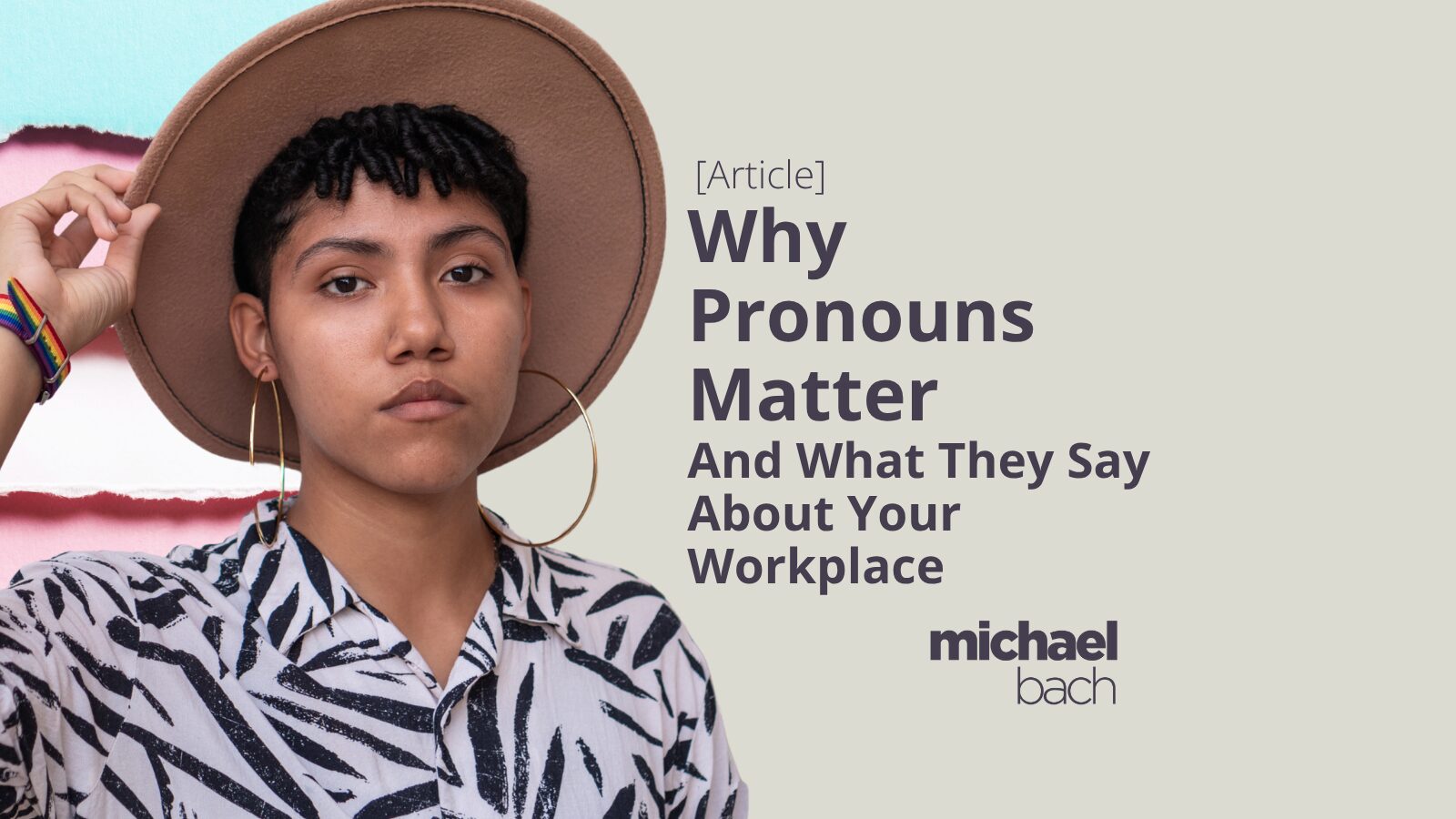
Let's talk pronouns. Yes, those tiny words that pack a big punch.
For some, using the right pronouns is second nature. For others, it feels unfamiliar, maybe even uncomfortable. But here's the thing: respecting someone's pronouns isn't about being politically correct, it's about being personally respectful.
And in the workplace, respect isn't optional. It's foundational.
🧠 What Pronouns Are (and What They're Not)
Pronouns are simply how we refer to someone in the third person when we're not using their name. Think: he/him, she/her, they/them, and many others.
Using the correct pronouns affirms a person's identity. Misusing them, especially intentionally, does the opposite. It chips away at safety, trust, and belonging. And no, it's not "too much to ask." It's the bare minimum of respect.
🧍🏽♀️🧍🏽♂️🧍🏽♂️ Who This Impacts (Spoiler: Everyone)
Let's bust a myth: this isn't just about gender diverse people. It's about everyone.
When we normalize sharing and respecting pronouns, we create a culture where people don't have to explain, defend, or justify who they are. That's good for Trans folks, sure, but it also signals to everyone that this is a workplace rooted in inclusion, not assumption.
And let's be honest: assuming someone's gender because of how they look, sound, or dress? That's outdated, lazy, and potentially harmful.
🏢 Why It Matters in the Workplace
Respecting pronouns isn't a "nice-to-have" or a DEIA bonus round. It's core to:
- Psychological safety
- Inclusive leadership
- Stronger team culture
- Talent attraction and retention
If your workplace isn't affirming people for who they are, people won't bring their whole selves to work. And when that happens? Productivity drops. Innovation slows. Engagement plummets. Trust breaks.
This isn't theory, it's reality.
🧰 What You Can Do (And No, It's Not Hard)
Let's take the mystery out of allyship. You don't need a PhD in gender studies to get this right. Here's what meaningful action looks like:
- Add your pronouns to your email signature, Zoom profile, and LinkedIn. Normalize sharing so others feel safe doing the same.
- Listen and learn. If someone tells you their pronouns, use them. If you mess up, correct yourself and move on. No grand apology tour necessary, just effort.
- Challenge assumptions. Don't assume pronouns based on appearance or voice. Ask respectfully, or wait until they share.
- Educate your teams. Don't rely on Trans and non-binary employees to do all the emotional labor. Offer training and resources.
- Fix your systems. Update forms, HR databases, and onboarding documents to include space for pronouns. Not "preferred" pronouns, just pronouns.
🛑 What Not to Do
- Don't say "it's too hard." Respect isn't hard, it just takes practice.
- Don't tokenize. This isn't a trend. It's someone's identity.
- Don't center your discomfort. If your first response is "this is confusing," ask yourself: confusing for whom?
💬 Respect Is Contagious
Here's the beautiful thing about pronouns: when you start respecting them, people notice. It becomes a ripple effect of humanity, dignity, and trust.
People perform better when they feel safe. They stay longer. They engage more deeply. They bring fresh ideas forward.
So if you're serious about inclusion, pronouns aren't optional, they're essential.
💥 The Bottom Line
When you respect someone's pronouns, you're not just being polite. You're affirming their right to exist as they are. You're creating a workplace where everyone can show up fully and authentically.
And that's not just good for people, it's good for business.
Learn more about Michael's speaking topic, He/She/They/Hey! Understanding the Why and How of Pronouns.