
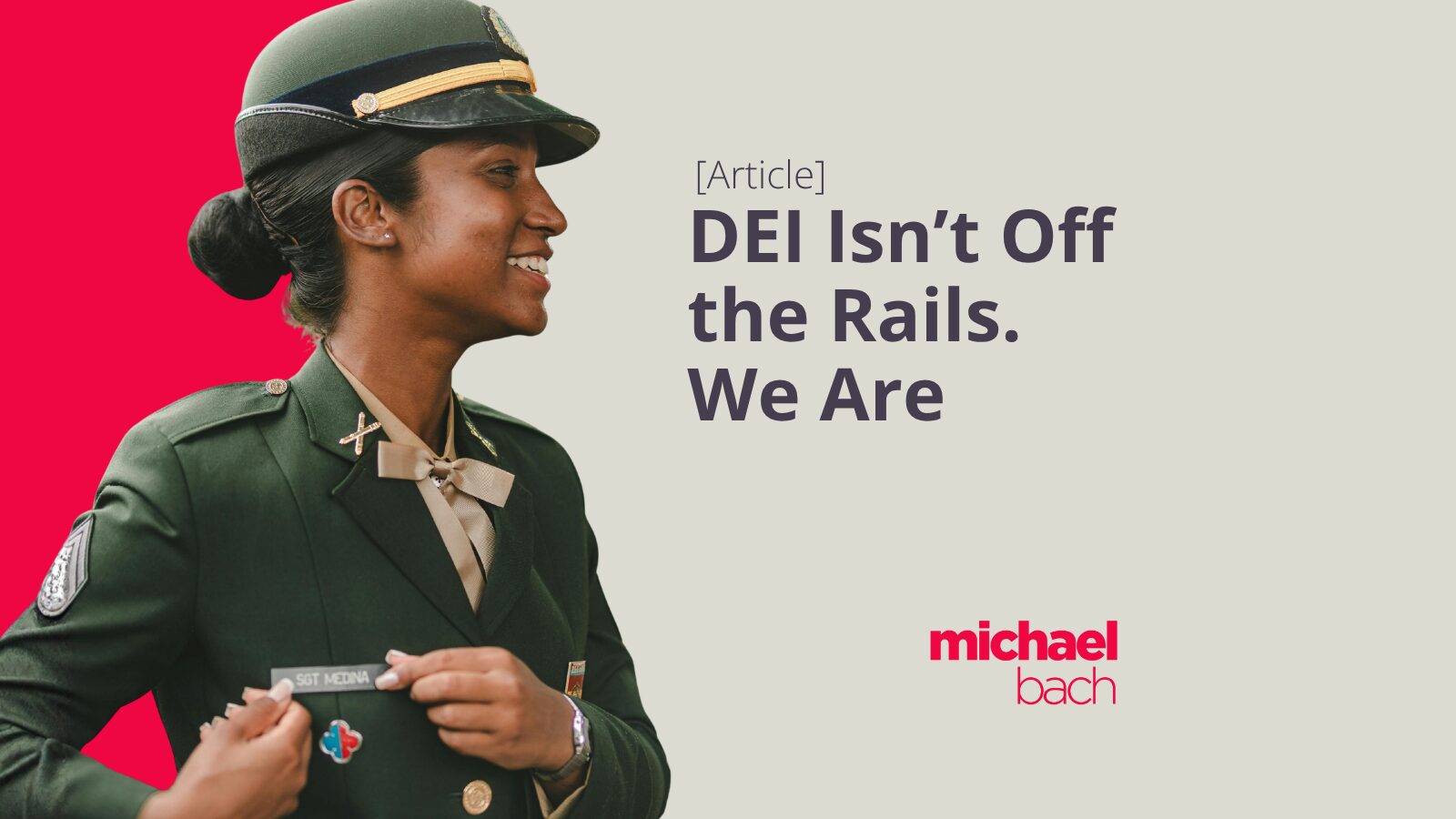
🚂 DEIA Isn't Off the Rails, We Are
Let's be honest: there's been a lot of noise lately about how DEIA (diversity, equity, inclusion, and accessibility) is "on the way out." It's been labelled as performative. Political. Too "woke." Too "soft." And some organisations, spooked by backlash or bored with the pace of change, are hitting the brakes.
But here's the truth: DEIA isn't the problem. The way we've been doing it might be.
It's not DEIA that went off the rails. It's us. And now, we have a choice: abandon the work, or fix the track and keep moving forward.
🧠 Why DEIA Still Matters (Yes, Still)
Let's start with the obvious: we need DEIA.
We need it in our workplaces. In our schools. In our boardrooms. In our government. In our culture. Because our world isn't equitable. It never has been. And pretending otherwise is not only dishonest, it's dangerous.
DEIA exists to level the playing field. To interrupt systems that were built for the few and leave the rest behind. To create environments where people, all people, can thrive.
It's not just a business strategy. It's a social responsibility.
📈 The Business Case Is Still Rock Solid
If you're here for the data, great, I've got that too.
Organisations that prioritise diversity, equity, inclusion, and accessibility outperform their peers on:
- Innovation
- Financial performance
- Retention
- Employee engagement
- Market reach
This isn't a theory. It's a fact. McKinsey, Deloitte, Boston Consulting Group, Accenture, pick your source, the numbers all say the same thing:
Diverse teams make better decisions. Inclusive cultures drive results.
If you're backing off DEIA, you're not being strategic. You're being shortsighted.
💥 The Cost of Giving Up
Let's be clear: when organisations backpedal on DEIA, they're not "depoliticising." They're reinforcing inequity.
When companies:
- Disband employee resource groups
- Cut DEIA roles
- Silence conversations about identity and inclusion
- Avoid "hot button" topics out of fear
...they're sending a message. And it's not a good one. The message is: You don't belong here.
And when people don't feel like they belong, they leave. That's not just a loss of talent; it's a loss of credibility, trust, and future readiness.
🛠️ How We Get It Back on Track
So what do we do? We refocus. We rebuild. We do the work with intentionality.
Here's what it looks like:
-
🔍 Reconnect DEIA to strategy. Stop treating it like an add-on or an HR initiative. It should be embedded in your leadership, operations, product design, and culture.
-
📊 Use data to drive impact. Representation. Equity in pay and promotion. Retention and engagement. Don't just talk values, measure them.
-
🎯 Make DEIA everyone's job. From frontline staff to the C-suite, inclusion should be in everyone's performance expectations.
-
🧠 Invest in education, not just awareness. Go beyond the surface-level workshops. Teach people how to lead inclusively. How to challenge bias. How to create safe, accessible environments.
-
✊ Stand up, publicly and consistently. When the backlash hits (and it will), be ready. DEIA isn't a PR campaign. It's a commitment. And you have to defend what you claim to value.
🧭 This Isn't a Detour, It's the Journey
DEIA isn't a train we hop off when it gets uncomfortable. It's the foundation for the kind of workplaces and country we say we want: fair, inclusive, and thriving. Backing away now doesn't make the work irrelevant. It makes it urgent.
So let's stop asking, "Is DEIA still relevant?" And start asking, "Are we still committed?" Because the track is still there. The need is still real. The train is ready.
All aboard.
Learn more about Michael's speaking topic, All Aboard: How DEIA went off the rails, and how we can get the IDEA train back on the track.